The Truth About Electric Heating in the UK (2026 Guide)

Electric heating in the UK has a reputation problem.
Some people hear the words and immediately think:
“Expensive.”
“Old-fashioned.”
“Storage heaters.”
“Sky-high bills.”
Others talk about electric heating as if it is the future of everything and the answer to every home heating problem from Cornwall to Cumbria.
As usual, the truth sits somewhere in the middle.
Electric heating is not one thing. That is the first mistake people make.
An electric boiler is not the same as an air source heat pump.An infrared panel is not the same as an electric radiator.A modern heating system is not the same as the clunky relic your aunt had in 1997.
So let’s clear the fog.
This is the honest guide to electric heating in the UK: what it really means, what your options are, who each one suits, and where homeowners get caught out.
First things first: what counts as electric heating?
In simple terms, electric heating means any home heating system powered by electricity rather than gas, oil, or LPG.
That can include:
Air source heat pumps
Ground source heat pumps
Electric boilers
Electric radiators
Infrared heating panels
Storage heaters
Direct electric panel heaters
That is a wide church.
And it matters because when people say,“Electric heating is good”or“Electric heating is rubbish,” they are often lumping together products that behave very differently.
That is like saying bicycles, vans, and trains are all the same because they move people around.
Why electric heating is getting more attention
There are a few reasons electric heating is climbing up the homeowner agenda.
First, the UK is moving toward lower-carbon heating.
Second, more homeowners are looking for alternatives to gas — whether because of energy concerns, environmental reasons, or the simple desire to future-proof their home.
Third, products such as heat pumps have moved from niche to mainstream conversation, helped by grants and growing awareness.
And fourth, some homes — especially flats, smaller properties, or homes off the gas grid — are naturally more suited to electric options than many people realise.
So the interest is real.
But interest should not be confused with suitability.
The biggest myth of all: electric heating is one single choice
It is not.
This is where good decisions begin.
Because the right question is not:
“Should I get electric heating?”
The right question is:
“Which electric heating system, if any, is right for my home?”
That is a much better question.
The main electric heating options — and who they suit
Let’s go through them plainly.
1. Heat pumps
Heat pumps are the stars of the modern low-carbon conversation.
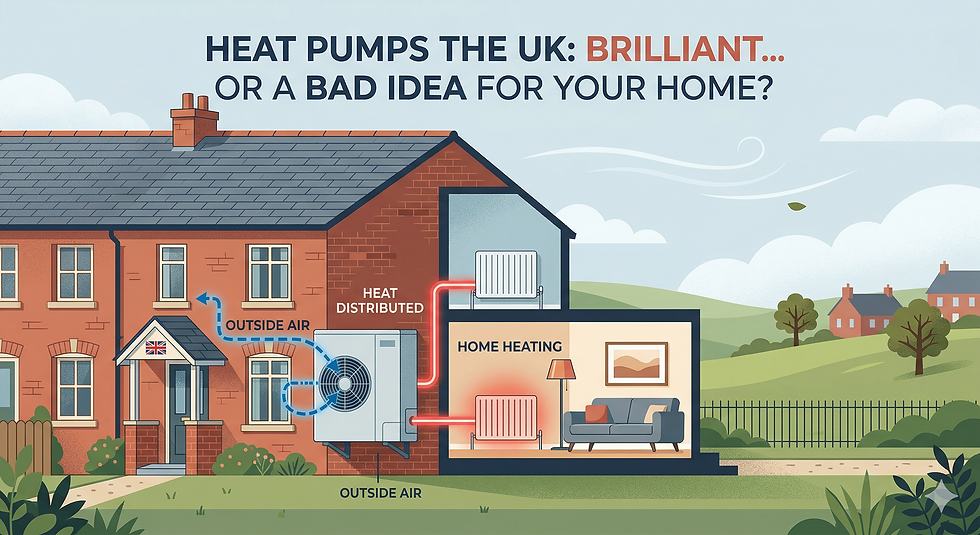
They do not generate heat in the same way a boiler does. They move heat from outside into your home. That makes them far more efficient in the right setup than direct electric heating systems.
Best for:
homeowners planning long term
reasonably well-insulated properties
homes where the system can be properly designed
people who want lower-carbon heating and can work with steady background warmth
Less suited for:
poorly insulated homes
homeowners expecting instant blast-heat
people choosing based purely on the lowest upfront cost
Heat pumps can be excellent. But only when the property and design support them.
2. Electric boilers
Electric boilers are neat, tidy, and simple.
They work with wet central heating systems and can suit homes where gas is unavailable or impractical.
Best for:
flats and smaller homes
homes off the gas grid
people wanting a familiar radiator-and-hot-water setup
properties where simplicity matters
Less suited for:
larger homes with high heat demand
households focused hard on running costs
poorly insulated properties
They are simple, yes. But cheap to run in all cases? No.
3. Electric radiators
Modern electric radiators are a different breed from the old electric heaters many people remember.
They can offer room-by-room control, clean installation, and flexible heating without pipework.
Best for:
smaller homes
extensions, loft conversions, and specific rooms
homes where installing wet heating is impractical
homeowners who value control and simple installation
Less suited for:
large whole-house heating in poorly insulated properties
households expecting gas-like running costs
Good ones can be practical and attractive. But as with all direct electric heating, running costs deserve a hard look.
4. Infrared heating
Infrared heating is the one that makes people either curious or suspicious.
It works differently from conventional systems by heating people and surfaces more directly rather than simply warming the air.
Best for:
well-defined spaces
modern interiors
occasional-use rooms
homeowners open to a different kind of heat experience
Less suited for:
people wanting traditional whole-home wet heating
anyone buying it without understanding how it feels and performs in daily use
Infrared can work well in the right setting. But it is not a universal replacement for every heating system in every home.
5. Storage heaters and direct panel heaters
These are often what people think of when they hear “electric heating.”
Modern versions can be better than the old models people remember, but performance and running costs still depend heavily on the tariff, controls, insulation, and usage pattern.
Best for:
some flats and smaller properties
specific off-gas situations
homes using tariff strategies effectively
Less suited for:
homeowners wanting total flexibility without understanding timing and control
larger, heat-hungry homes
These systems are not automatically bad. But they need realistic expectations.
The question everyone really wants answered: is electric heating expensive?
Sometimes yes.
Sometimes no.
Annoying answer, I know. But honest.
The running cost of electric heating depends on:
the type of system
the size of your home
how well insulated it is
your electricity tariff
how much heating and hot water you use
whether the system is designed properly
Here is the crucial distinction:
Direct electric heating
Systems like electric boilers, electric radiators, panel heaters, and infrared usually use electricity directly to create heat.
They can be efficient in the technical sense, but electricity is generally expensive per unit compared with gas.
So in many homes, direct electric heating can cost more to run.
Heat pumps
Heat pumps are also electric, but they work differently. Because they move heat rather than generate it directly, they can deliver more heat per unit of electricity used.
That is why heat pumps deserve to be treated as a separate category, not thrown into the same bucket as every other electric system.
Where homeowners go wrong
There are three classic mistakes.
Mistake 1: Choosing the product before understanding the property
The house comes first.
Its insulation, size, layout, heat loss, existing pipework, radiators, hot water demand, and available space matter far more than the brochure.
Mistake 2: Confusing efficiency with low bills
A system can be technically efficient and still be costly to run if the fuel itself is expensive or the home needs a lot of heat.
Mistake 3: Believing one system suits everyone
It does not.
There is no heating product that is perfect for every UK home.
Anyone pretending otherwise is selling comfort blankets, not truth.
So who should seriously consider electric heating?
Electric heating may be well worth considering if:
your home is off the gas grid
you live in a flat, apartment, or smaller property
you are renovating or extending
you want room-by-room control
you are planning a low-carbon future
your home is suitable for a heat pump
you want alternatives to gas and are willing to compare them properly
And who should be cautious?
owners of larger poorly insulated homes
households with high heat and hot water demand
anyone chasing the lowest possible running cost without improving the home fabric first
anyone being pushed toward a product without a proper property-level assessment
The sensible way to think about it
Do not ask:
“Is electric heating good?”
Ask:
Which type?
For what kind of property?
With what insulation?
At what running cost?
With what installation complexity?
Over what time horizon?
That is how grown-up heating decisions are made.
Not with hype. Not with scare stories. Not with one-size-fits-all advice.
Final verdict
Electric heating in the UK is neither miracle nor madness.
It is a set of tools.
Used in the right home, in the right way, for the right reasons, some electric heating systems can be excellent.
Used badly, they can be expensive, disappointing, and deeply annoying.
The real skill is not finding the most fashionable heating product.
It is finding the one that fits your home, your budget, and the way you actually live.
Because the best heating decision is rarely the loudest one.
It is the one that still feels right when the weather turns cold and the bill arrives.
Thinking about electric heating for your home?
Before you choose anything, compare:
heat pumps
electric boilers
electric radiators
infrared heating
your insulation level
likely installation costs
likely running costs
what kind of warmth and control you actually want
That is exactly why this site exists - to help UK homeowners make informed, confident decisions without the sales fog.

Comments